
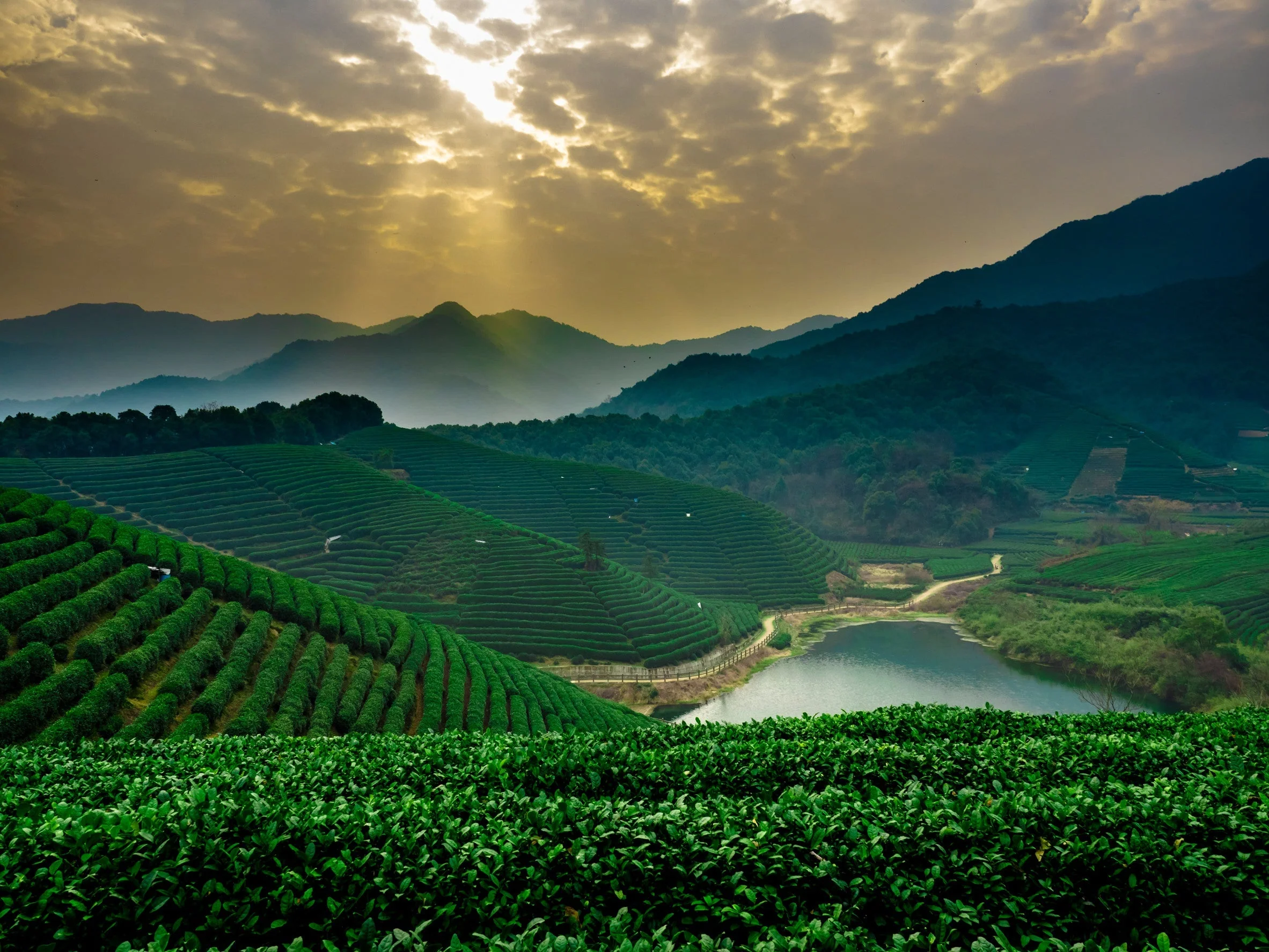
In the world of premium and specialty tea, few terms evoke as much intrigue as “high mountain tea.” Grown at elevations where mist blankets the slopes and temperatures shift dramatically between day and night, these tea varieties — especially the high mountain oolong teas — are cherished for their purity, depth of flavor, and regional uniqueness. But what exactly is high mountain tea—and why are connoisseurs and newcomers alike drawn to it?
What Is High Mountain Tea?
High mountain tea refers to teas cultivated at elevations typically above 1,000 meters (about 3,300 feet), most commonly associated with areas in China and Taiwan, although high-elevation teas are also grown in other parts of the world. The altitude, combined with cooler temperatures and frequent cloud cover, slows leaf growth, allowing more concentrated flavor compounds to develop.
What Makes High Mountain Tea Better?
Altitude plays a crucial role in shaping the growth of tea leaves, directly impacting their flavor profile and structure. Research published in Frontiers in Plant Science highlights how elevation significantly influences tea quality by affecting the formation of secondary metabolites, such as catechins and theanine. The key factors contributing to the renowned quality of high-mountain tea include:
- ☁️ Cooler Temperatures = Slower Growth
- At higher elevations (typically 1,000+ meters), tea plants grow at a slower pace.
- Slower growth leads to more concentrated compounds such as amino acids (like L-theanine), catechins, and aromatic volatiles.
- The result? Sweeter, smoother, and more fragrant tea with reduced bitterness.
- 🌡️ Wide Temperature Swings (Diurnal Range)
- Warm daytime temperatures fuel photosynthesis and plant growth.
- Cooler nights slow respiration, helping to preserve aromatic compounds.
- This temperature contrast enhances sweetness and delicate floral or fruity notes.
- 🌬️ Thinner Air = More Stress, More Flavor
- Reduced oxygen levels at high altitudes mildly stress the plants.
- In response, they produce more secondary metabolites, such as polyphenols and antioxidants, as a natural defense.
- These compounds elevate the flavor, aroma, and health benefits of the tea.
- 🌞 Increased UV Exposure
- Higher altitudes mean stronger UV radiation.
- This triggers the production of anthocyanins and other protective compounds, enhancing the color, mouthfeel, and subtle astringency of the tea.
- 🌱 Pristine Environment + Cloud Cover
- High-altitude tea is often grown in remote, unpolluted areas.
- Morning mists and cloud cover provide natural shade, boosting L-theanine levels while lowering catechins. This creates a silky, umami-rich flavor, especially prized in high mountain oolongs and green teas.
The Taste of High Mountain Tea
High mountain teas are known for their clarity, smoothness, and aromatic complexity. They often feature a delicate sweetness, floral or fruity overtones, and a lingering finish. Because the leaves mature more slowly, they retain higher levels of antioxidants and L-theanine, an amino acid that contributes to the tea’s umami taste and relaxing effect. This makes them especially appealing to those seeking a more refined sensory experience.
How High Mountain Teas Are Made
High mountain teas are crafted similarly to other teas, with the process varying based on the type of tea being produced. What truly sets them apart is the unique environment in which they are grown. While altitude isn’t crucial for every tea variety, it plays a significant role for certain types, particularly oolong teas, which is a very broad category, containing hundred of varieties.
Dark teas like pu-erh also benefit greatly from high elevations. Pu-erh, in particular, is native to Yunnan Province, a region where tea plants originated and where elevations can soar to impressive heights. For many black teas, such as lapsang souchong, high elevation is less critical but still offers desirable qualities. Similarly, white teas are not heavily influenced by altitude but can still gain subtle benefits from being grown at higher elevations.
Spotlight on High Mountain Oolong Tea
One of the most celebrated categories within high mountain teas is high mountain oolong tea. These semi-oxidized teas are almost exclusively grown in Taiwan and China, where the mountainous terrain and meticulous craftsmanship produce some of the world’s most revered oolongs.
Key characteristics of high mountain oolong tea include:
- Light to medium oxidation: Preserves floral and creamy notes while offering a rich, balanced body.
- Tightly rolled leaves: Slowly unfurl during multiple infusions, revealing new layers of flavor.
- Aromatics: Hints of orchid, milk, and alpine herbs depending on the cultivar and processing.
The phrase “high mountain oolong” is quite broad, as oolong tea spans a wide and diverse spectrum from low to high oxidation levels. Although not all oolong teas are grown at high altitudes, many are, along with certain green and black teas.
- Qing Xin (青心烏龍)
- Type: Oolong
- Grown in: Taiwan (Alishan, Lishan, Shan Lin Xi, Da Yu Ling)
- Notes: The go-to cultivar for Taiwan’s high mountain oolongs. Known for floral aroma, creamy texture, and slow growth that thrives in cool, misty conditions.
- Jin Xuan (金萱) – TTES #12
- Type: Oolong (can also be processed as green or black)
- Grown in: Taiwan, Thailand, Vietnam (often at mid-to-high elevations)
- Notes: Slightly more robust than Qing Xin, with buttery, milky flavor. Good yield and cold tolerance make it suitable for high-altitude farms.
- Tsui Yu (翠玉) – TTES #13
- Type: Oolong
- Grown in: Taiwan (can be found at mid-to-high altitudes)
- Notes: Clean, floral-fruity profile. Less delicate than Qing Xin but suited to cooler, foggy areas.
- Fo Shou (佛手) – Buddha’s Hand
- Type: Oolong
- Grown in: Wuyi Mountains, Guangdong, and parts of Taiwan at elevation
- Notes: Large leaves, intense aroma. Performs well in rocky, higher terrain.
- Mi Lan Xiang (蜜蘭香) – Honey Orchid Phoenix (Dan Cong sub-type)
- Type: Oolong (Dan Cong category)
- Grown in: Phoenix Mountain (600–1,300m)
- Notes: Technically a fragrance type, not a cultivar name, but usually tied to specific old-growth trees that thrive at higher elevations within the Dan Cong category.
- Tie Guan Yin (鐵觀音)
- Type: Oolong
- Grown in: Anxi highlands (~800–1,200m)
- Notes: Original cultivar used for the famous Iron Goddess of Mercy. Grows best in mid-to-high elevations, though often cultivated lower due to popularity.
- Longjing #43 (龍井43號)
- Type: Green tea
- Grown in: Zhejiang and highland zones of Anji
- Notes: A common Longjing cultivar that adapts well to cooler, elevated climates, especially for early spring harvesting. Classic longjing, Qunti Zhong (群体种), typically does better at middle elevations.
- Anji Bai Cha (安吉白茶樹)
- Type: Green tea
- Grown in: Anji County (~800–1,200m)
- Notes: This rare green tea cultivar requires cooler mountain conditions and turns pale green/white in early spring due to low chlorophyll levels.
- Zhongcha 108 / #108 (中茶108號)
- Type: Green and oolong
- Grown in: Yunnan and some high-elevation zones
- Notes: A robust hybrid that tolerates higher altitudes and cooler temperatures. Used in both green and processed oolongs.
- Yunkang #10 (雲抗10號)
- Type: Black tea
- Grown in: Yunnan (often above 1,000m)
- Notes: A cultivar developed for Yunnan black tea (Dian Hong), thriving in the cloudy, high-altitude conditions of Yunnan’s mountain zones.
How to Brew High Mountain Tea
To truly appreciate high mountain tea, it’s worth taking a thoughtful approach to brewing:
- Use spring or filtered water to avoid masking the tea’s subtleties.
- Keep water temperature around 85–90°C (185–194°F) for lighter oolongs and slightly lower for green styles.
- Multiple short infusions (20–40 seconds) allow the flavor to evolve with each steep.
Gongfu-style brewing is particularly well-suited, offering a more intimate way to explore the tea’s unfolding character.
What to Look for When Buying
If you’re new to high mountain tea, here are some indicators of authenticity and quality:
- Origin Transparency: Look for specific region names and elevation ranges.
- Harvest Date: Spring and winter harvests are often prized for their clarity and aromatic strength.
- Leaf Appearance: Whole, tightly rolled leaves usually indicate hand processing and careful handling.
Trusted specialty tea vendors often provide sourcing details and tasting notes. Beware of vague labeling, as “high mountain” is sometimes used as a marketing term without real elevation behind it.
The Growing Popularity of High Mountain Tea
As interest in wellness, sustainability, and artisanal products grows, so does the appeal of high mountain tea. Its clean profile and calming properties align well with modern lifestyles seeking quality over quantity. Tea enthusiasts appreciate not only the flavor, but also the health benefits and mindful ritual it invites into daily life.
Final Thoughts
High mountain tea is more than just a beverage—it’s a reflection of nature’s precision and human artistry. From the serene mountainsides where the leaves are grown to the care and attention in every cup, these teas offer a meaningful introduction to the world of specialty tea. Whether you’re just beginning your journey or expanding your palate, exploring high mountain teas—especially the revered high mountain oolong teas of Taiwan—is a rewarding experience rooted in tradition and taste.